
An interest rate differential, or IRD, is one of two figures a lender compares when a client breaks a fixed mortgage early. The lender works out three months' interest, works out the differential separately, and charges whichever number is greater. Knowing how the differential itself is built lets you walk a client through a number that otherwise looks arbitrary.
The Two Penalties a Lender Compares
Three months' interest is simple: the current balance, times the contract rate, times three-twelfths of a year. The differential is the more involved of the two, and it is the one that usually produces the bigger number on a mortgage with several years left and a meaningful gap between the client's rate and today's rates. Both are calculated every time; only the greater of the two is charged.
How an Interest Rate Differential Is Worked Out
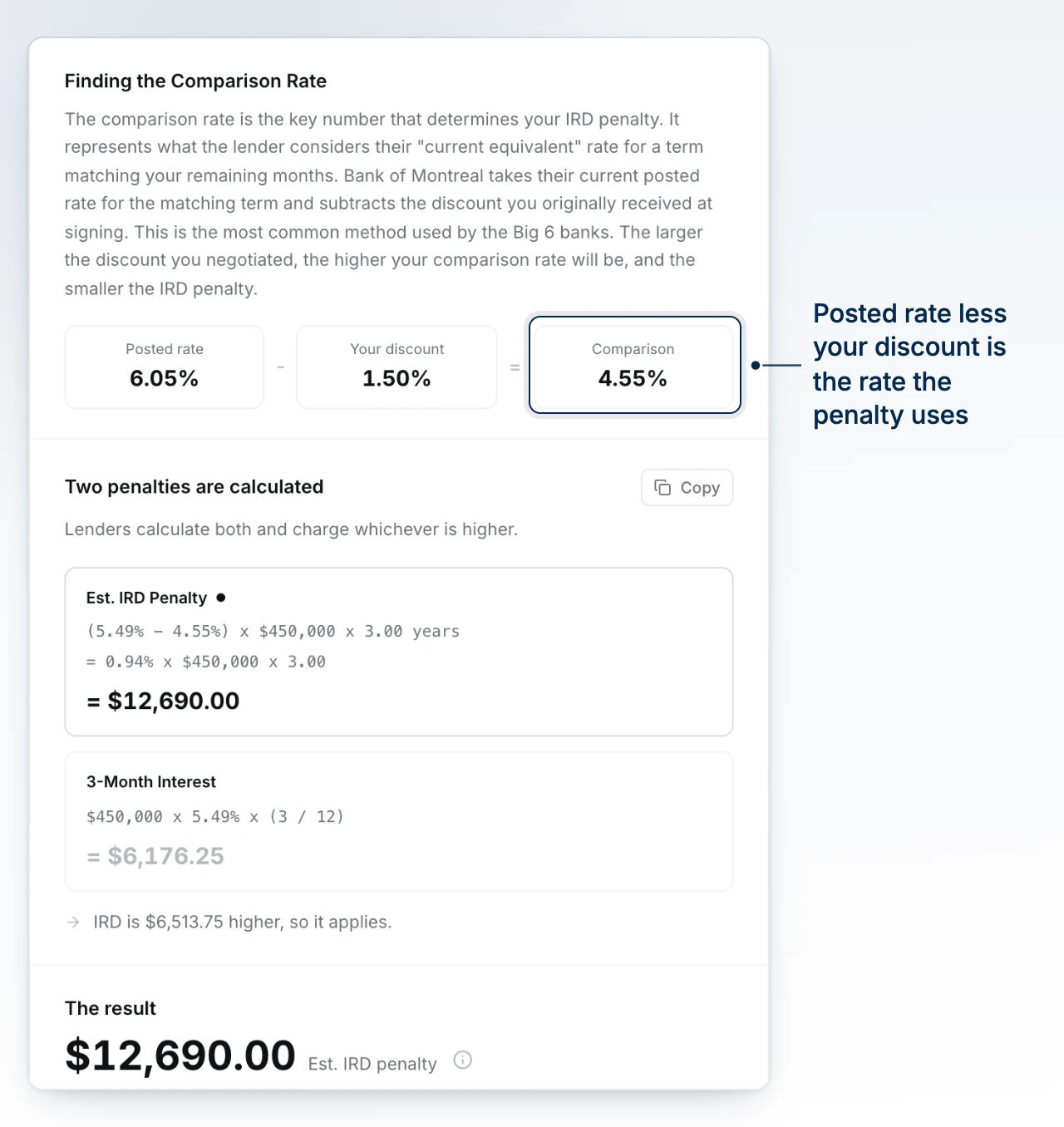
The differential is the gap between the client's contract rate and a comparison rate, multiplied by the balance, multiplied by the years remaining on the term. A wider gap, a bigger balance, or more time left on the term all push the number higher. Nothing here is unusual to mortgages generally; the part that varies by lender is what the comparison rate actually is.
Where the Comparison Rate Comes From
The comparison rate is meant to represent what the lender could re-lend the money at today for a term matching what is left, but each lender chooses its own way to express that. Most Big Six banks use their own posted rate for the matching term, minus the discount the client received at signing. Others measure the gap between the posted rate at signing and today's posted rate instead, and monoline lenders often compare against the rate they would actually reinvest at today rather than a posted rate at all. This is exactly why identical mortgages price differently at different lenders, and it is covered on its own in Lender-Specific Penalty Rules rather than repeated here.
What Changes on a Variable Mortgage
A variable-rate mortgage has no fixed rate to run a differential against, so it only ever faces the three-months'-interest penalty. Confirm this against the calculator result rather than assuming it, since a handful of lenders price even that flat penalty differently for a variable product.
Explaining the Figure to a Client
Open the calculation explainer on any result to see the exact comparison rate used and how the calculator arrived at it, including the posted rate and discount behind it where that applies. Walking a client through the comparison rate first, then the gap, then the multiplication, is usually clearer than leading with the final dollar figure. Make clear the number is an estimate: the lender's own payout statement is the figure that actually matters at closing, and a broker-facing estimate exists to set expectations ahead of that, not to replace it.
What to Do Next
Read Lender-Specific Penalty Rules for how individual lenders diverge from the standard method, or return to Run a Prepayment Penalty Calculation to price a client's actual numbers.